
IVF Treatment Explained Step by Step
From controlled ovarian stimulation to blastocyst culture and embryo transfer: an unhurried, transparent medical walkthrough.
Reviewed by Dr. Dileep Kumar H R, MBBS, DGO, DRM
October 2026 · Evidence-Based Healthcare
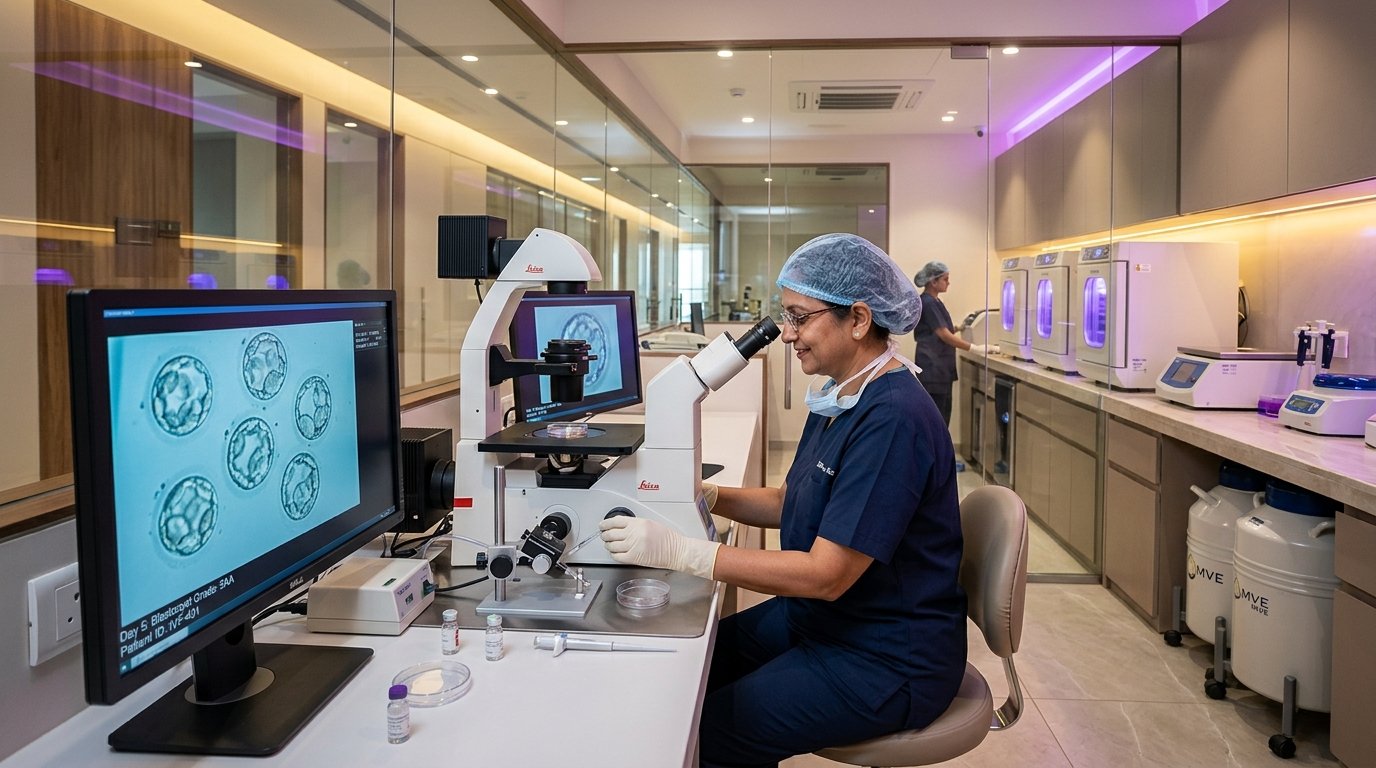
In Vitro Fertilisation (IVF) is the process of retrieving mature eggs from the ovaries and combining them with sperm in a high-precision laboratory environment. The fertilized eggs grow into embryos, one of which is carefully transferred back to the uterus.
Step 1: Ovarian Stimulation. Daily hormonal medications are administered for 10-12 days to encourage multiple follicles to develop mature eggs. Scans and blood tests monitor this progress every few days.
Step 2: Trigger Injection & Egg Retrieval. When follicles reach optimal size, a trigger shot induces final egg maturation. Approximately 35-36 hours later, eggs are retrieved using a fine ultrasound-guided needle under gentle sedation.
Step 3: Fertilization & Embryology. The retrieved eggs are fertilized using conventional IVF or ICSI (Intracytoplasmic Sperm Injection). The embryos are cultured in specialised incubators until they reach Day 3 (cleavage stage) or Day 5 (blastocyst stage).
Step 4: Embryo Transfer. A single high-grade blastocyst is placed gently into the uterine cavity using a soft, flexible catheter under abdominal ultrasound guidance. This procedure is completely painless and requires no anaesthesia.
Step 5: The Luteal Phase & Pregnancy Test. Progesterone support is provided for roughly 14 days, followed by a quantitative beta-hCG blood test to confirm pregnancy.
Considering a Second Opinion on Your Reports?
Bring your previous cycle logs, scans, and tests for an unhurried, independent review with Dr. Dileep Kumar H R.
Frequently Asked Questions
No. The procedure is performed under short intravenous sedation overseen by our consultant anaesthesiologist, Dr. Rajath. You sleep comfortably and feel no pain during the 15-minute procedure.