
What Happens During an IVF Cycle? From Stimulation to Embryo Transfer
Why modern fertility centres frequently separate the egg collection cycle from the embryo transfer cycle.
Reviewed by Dr. Dileep Kumar H R, MBBS, DGO, DRM
October 2026 · Evidence-Based Healthcare
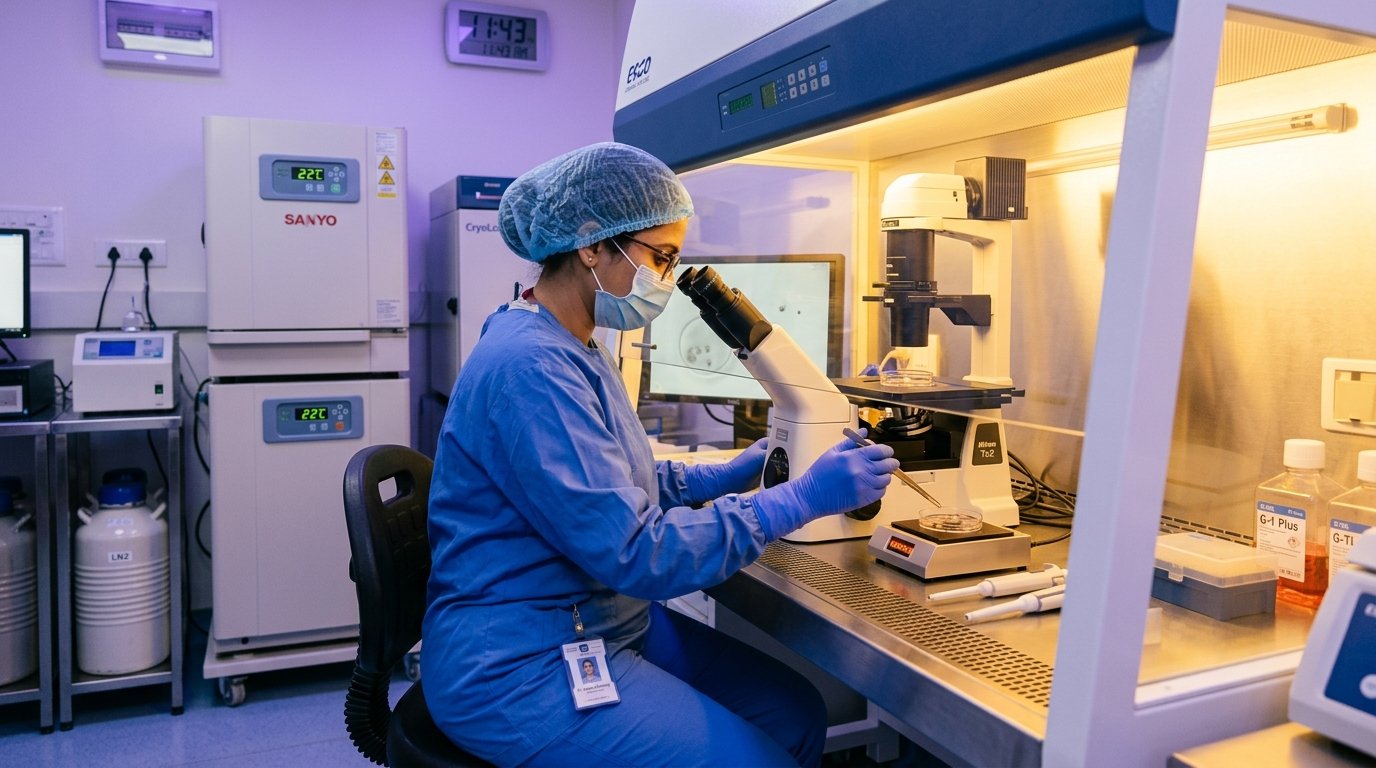
In the early decades of IVF, embryos were almost always transferred fresh just 3 to 5 days after egg retrieval. Today, one of the greatest advances in reproductive medicine is the Frozen Embryo Transfer (FET) strategy.
During ovarian stimulation, hormone levels (especially estradiol and progesterone) can be significantly higher than in a natural cycle. In some patients, these elevated hormone levels can cause the uterine lining (endometrium) to advance too quickly, reducing the window of receptivity for an embryo.
By flash-freezing (vitrifying) high-grade blastocysts, the woman's body is allowed to return to its natural physiological baseline over one or two menstrual cycles.
In a subsequent cycle, the endometrium is prepared deliberately using natural tracking or gentle oral estrogen and progesterone, creating optimal conditions for embryo implantation.
FET also dramatically reduces the risk of Ovarian Hyperstimulation Syndrome (OHSS), making IVF cycles vastly safer and more comfortable for patients.
Considering a Second Opinion on Your Reports?
Bring your previous cycle logs, scans, and tests for an unhurried, independent review with Dr. Dileep Kumar H R.
Frequently Asked Questions
No. With modern vitrification technology, embryo survival rates exceed 95%, and pregnancy rates with FET are frequently equal to or higher than fresh transfers because the uterine lining is more receptive.